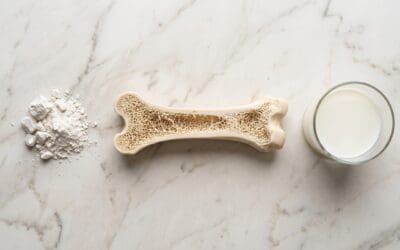
For years – especially throughout the late 90s and early 2000s – weight-loss advice was relentlessly reductive: eat less, avoid fat and cut kilojoules at all costs. Skim milk became the default “healthy” choice, full-cream dairy was treated with baseline suspicion and the number on the scale was positioned as the ultimate arbiter of success on a weight-loss journey.
While our conversations around body diversity and holistic health have thankfully evolved, the cultural pressure to be smaller hasn’t vanished. That is precisely why everyday staples like dairy continue to spark debate. Is full-fat dairy actually bad for weight loss? Is low-fat really the healthier choice? And does choosing one over the other make a meaningful difference at all? Answers incoming.
As medications like GLP-1s continue to dominate headlines and reshape how many people approach weight loss, experts say there’s increasing recognition that dropping body fat isn’t the only goal. Preserving muscle, supporting overall health and building sustainable eating habits matter too.
At the same time, the broader nutritional landscape is maturing. Instead of focusing entirely on restriction, clinicians are prioritising nutrient density, food quality and eating patterns that support long-term health and longevity.
Importantly, this shift isn’t a green light for an all-you-can-eat dairy buffet. While foods like milk, yoghurt and maas may play a far bigger role in modern weight management than many people realise, emerging evidence suggests the old full-fat versus low-fat debate is far more nuanced than a simple “good vs. bad” binary.
Meet the experts: Maretha Vermaak is a registered dietician for Rediscover Dairy. Dr Monique Piderit is a registered dietician based in Johannesburg.
READ MORE: The Best Dairy Foods For Weight Loss, Satiety And Muscle Support, According To Dieticians
So, Is Full-Fat Dairy Actually Bad For Weight Loss?
“The long-standing perception that full-cream dairy contributes significantly to weight gain is increasingly being reconsidered,” says registered dietician at Rediscover Dairy, Maretha Vermaak. In fact, “current evidence suggests that the role of dairy fat in weight management is more subtle than previously thought.”
While full-cream milk does contain more fat and energy than low-fat milk, the actual difference isn’t as dramatic as many people assume. “From a compositional perspective, full-cream milk contains approximately 3.4% fat and around 640 kJ (152 kcal) per serving,” Vermaak notes. While this is higher than low-fat milk (about 1.5% fat and 490 kJ/117 kcal), she points out that “the absolute difference in energy is modest, around 150 kJ per serving.”
In practical terms, Vermaak explains that this is comparable to the energy you get from a teaspoon of butter or margarine, meaning it “is unlikely to be a primary driver of weight gain within the context of an overall diet.”
She also points out that dairy fat is often singled out when compared with far more energy-dense options. “When placed in context, the fat content of full-cream milk is relatively low compared to many commonly consumed foods,” Vermaak says, spotlighting that while full-cream milk sits at a low 3.4% fat, potato crisps contain approximately 36% fat and butter biscuits sit around 32%. This highlights, as Vermaak notes, that the focus on dairy fat as a major contributor to excess energy intake may be disproportionate.
The Dairy Matrix, Explained
For a long time, nutrition conversations tended to zoom in on a single number: fat, kilojoules, carbs, or protein. But now, researchers are increasingly looking at the bigger picture. Rather than judging foods by one nutrient in isolation, scientists are exploring how nutrients work together inside whole foods. That’s where the concept of the dairy matrix comes in.
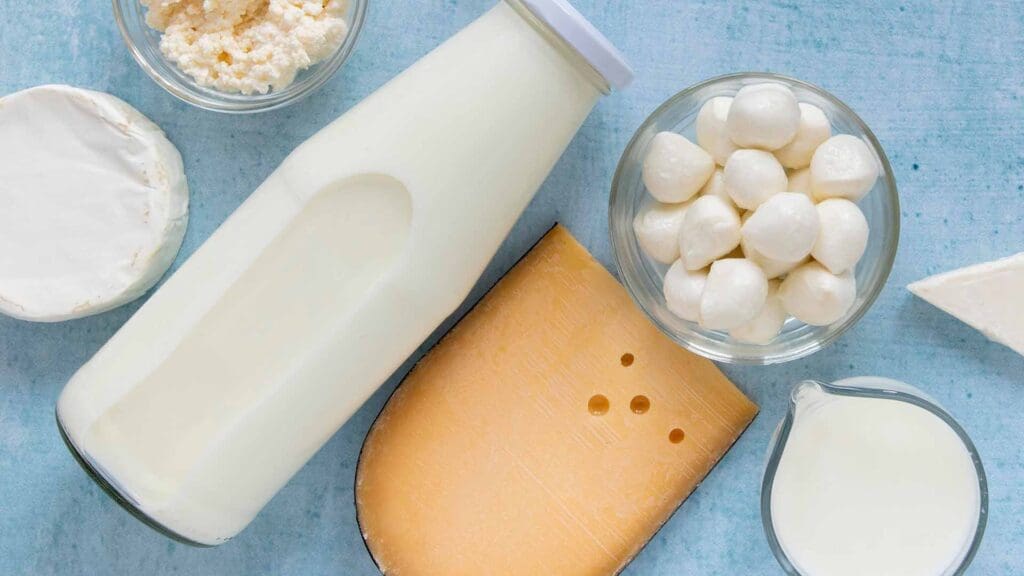
As Vermaak explains, the dairy matrix refers to the way nutrients inside dairy interact within the food’s natural structure. In simple terms, researchers are finding that foods can’t always be judged by one nutrient on its own. The way fat, protein, vitamins, and minerals work together inside a food influences how the body responds to it.
“Importantly, dairy foods should not be evaluated based on individual nutrients alone,” Vermaak emphasises. “The concept of the dairy matrix recognises that the physical and biochemical structure of dairy products influences digestion, nutrient absorption and metabolic outcomes.”
According to Vermaak, this interaction between fat, protein, and minerals such as calcium may influence satiety and metabolic responses differently compared with isolated dietary fats.
Emerging research suggests that dairy foods may affect cardiovascular health differently from what would be expected based on saturated fat content alone, although researchers are still working to fully understand these relationships.
READ MORE: 8 Healthiest Cheeses To Add To Your Diet, According To A Nutritionist
Why Dairy Is Back In The Weight-Loss Conversation
One of the biggest concerns around rapid weight loss, particularly when using GLP-1 medications, is the loss of lean muscle mass alongside fat. Registered dietician Dr Monique Piderit says this is where the conversation around weight loss needs to become more layered. “Whether you are following a personalised weight loss plan or using a GLP-1 medication, it’s important to shift from simply counting kilojoules and measuring your weight to focusing on overall well-being,” Dr Piderit explains. “Weight loss approaches can result in the loss of not only fat, but muscle mass too.” This matters because a loss of strength can impact day-to-day health and longevity.
This is exactly where dairy comes into the picture. “Emerging research shows that unintended muscle loss is commonly associated with GLP-1 treatments,” Dr Piderit points out. “That’s one of the reasons for a renewed focus on including dairy every day as part of a balanced weight management plan.”
Research suggests that protein requirements are often higher during weight loss when using GLP-1 therapy, with clinicians recommending around 1.2 to 1.5 grams of protein per kilogram of body weight daily to help protect muscle mass – a significant jump from the standard recommended daily allowance (RDA) of 0.8g per kg.
In theory, that sounds straightforward. In reality, it’s often harder than it seems. Many people using GLP-1 medications simply don’t feel hungry enough to consistently hit their protein targets. A heavily reduced appetite can make meeting those requirements incredibly difficult. Because patients often don’t feel hungry enough to consume large meals, protein-rich dairy foods like milk, yoghurt and maas are receiving renewed attention from nutrition experts.
Not All Dairy Foods Support Weight-Loss Goals Equally
However, before you add an extra layer of cheddar to your scrambled eggs or stock up on chocolate chip ice cream, experts urge a reality check. Much of the research around the dairy matrix focuses on minimally processed dairy foods such as milk, yoghurt and maas.
“Not all dairy products support weight-loss goals equally,” Vermaak cautions. “While dairy can play a valuable role in weight management, this depends heavily on the type of product and the overall dietary context.” Nutrient-dense options like milk, plain yoghurt, and maas fit beautifully into a balanced, kilojoule-controlled eating plan. Foods that contain dairy but are also high in added sugars, saturated fat and excess kilojoules – like ice cream, heavily sweetened dessert yoghurts, or loaded cheesy fries – are a completely different conversation.
This distinction becomes critical for anyone on a weight-loss journey or utilising GLP-1 therapy. Because your appetite is reduced, every single bite has a much bigger nutritional job to do. Prioritising lower-sugar, protein-rich dairy foods can help support muscle maintenance and nutritional adequacy during weight loss. Even whole foods like cheese require mindful portioning. “Up to 50g of hard cheese, such as cheddar, can absolutely be enjoyed daily as part of a healthy, varied diet,” Vermaak notes.
Full-Fat Dairy Offers More Than Just Kilojoules
There are also nutritional considerations beyond weight loss. “From a practical and nutritional perspective, the use of full-cream milk may be appropriate, particularly in households with children,” explains Vermaak. “Full-cream milk provides naturally occurring fat-soluble vitamins, including vitamin A, as well as essential fatty acids that are important for growth and development.” In contrast, she notes, “low-fat and fat-free milk contain significantly reduced levels of these nutrients unless they are fortified.”
READ MORE: 4 Reasons To Switch To Low GI Bread, According To A Dietician
Why Global Guidelines Are Changing
It’s not just researchers rethinking dairy, either. Dietary guidelines in several countries are beginning to reflect a more sophisticated view of dairy fat. “Recent updates to the U.S. Dietary Guidelines place less emphasis on strict avoidance of full-fat dairy, instead prioritising overall dietary patterns and nutrient quality. This reflects a broader shift away from reductionist approaches focused solely on fat content.”
According to Vermaak, several countries are moving towards more balanced conversations around dairy. “The most recent U.S. Dietary Guidelines, for example, retained dairy as a core food group without reducing recommended intake levels,” she says. In addition, she highlights that the United States recently announced support for the inclusion of full-cream dairy options in school meal programmes, “reflecting a broader shift away from focusing solely on fat reduction and toward overall nutritional quality.”
Similarly, Switzerland’s updated dietary guidelines no longer preferentially recommend low-fat dairy products. Instead, as Vermaak points out, they now “include full-cream milk and dairy products as part of daily healthy eating patterns.” Belgium has followed a very similar direction.
READ MORE: Here’s Why It’s So Common To Regain Weight After Losing – And What You Can Do About It
What This Means For South Africans
While international trends are important, Vermaak says South Africa’s nutritional realities remain unique. The current South African Food-Based Dietary Guidelines still recommend that people “have milk, maas and yoghurt every day”.
“This recommendation was included specifically because South Africans consume inadequate amounts of calcium and dairy products overall,” Vermaak explains. “In addition, South Africa continues to face high rates of hypertension, malnutrition, micronutrient deficiencies and childhood stunting, conditions for which nutrient-dense foods such as dairy can play an important supportive role.”
She adds that dairy intake remains low across much of the population, while calcium intake continues to fall below recommended levels. “Milk and dairy products contribute three of the four nutrients commonly lacking in the South African diet, namely calcium, vitamin A and potassium,” says Vermaak. “It is also a good source of high-quality protein and other essential micronutrients.”
READ MORE: 9 Best Hiking Snacks, According To A Dietician
The Bottom Line
The experts aren’t suggesting that full-cream dairy is automatically better than low-fat options, nor that everyone should make the switch. Rather, they say the choice should be based on your overall eating pattern, nutritional needs and personal preferences.
“In summary, while low-fat milk provides a small reduction in energy intake, the difference is relatively minor,” Vermaak concludes. “For weight management, greater emphasis should be placed on reducing intake of energy-dense, highly processed foods.” Within a balanced diet, she says, “full-cream milk can be included without compromising weight-related goals.”
As always, because everybody responds differently, speak to your doctor or dietician to find the balance that works for your individual goals.